
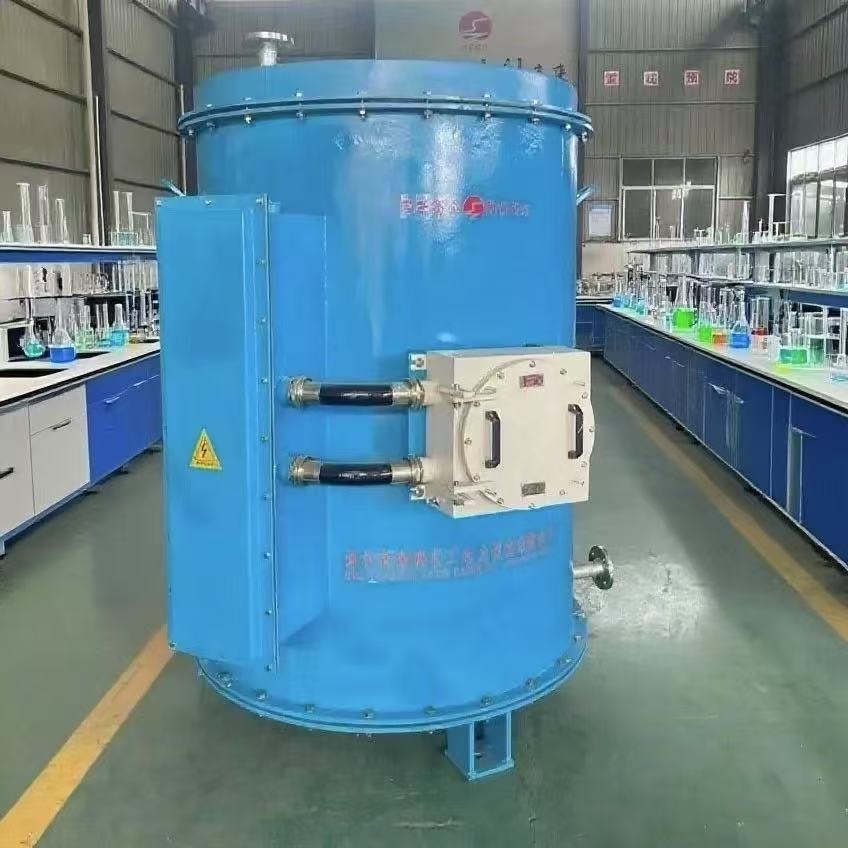
China Custom Electric Heater: Tailored Heating Solutions for Your Unique Needs
2026-07-25
In today's fast-paced industrial landscape, off-the-shelf heating equipment often falls short of meeting distinct operational demands. Enter custom electric heaters from China—precision-engineered to match your exact specifications, whether for chemical processing, manufacturing, or specialized applications. At the forefront of this innovation is Shenzhou Chemical Industry, a name synonymous with reliability and bespoke thermal solutions. Discover how tailored design can unlock efficiency, safety, and performance that standard units simply cannot deliver.
Precision Engineering for Your Unique Heating Requirements
Every heating application comes with its own set of demands, and off-the-shelf solutions rarely fit perfectly. Our approach begins with a deep dive into your specific requirements—whether it’s a tight temperature tolerance, an unusual form factor, or exposure to harsh environments. By combining advanced simulation tools with decades of hands-on expertise, we design heating elements that align precisely with your operational goals, not someone else’s idea of what might work.
What sets our engineering apart is the relentless focus on material selection and manufacturing precision. We don’t just pick alloys from a catalog; we test and verify how each material performs under your exact conditions, from thermal cycling to chemical exposure. This meticulous process ensures that every heater we produce delivers consistent performance, minimizing drift and extending service life in ways that generic products simply cannot match.
Collaboration is at the core of how we bring these solutions to life. Rather than handing over a spec sheet and hoping for the best, we stay involved from prototyping through final validation, tweaking geometries or watt densities until the heater feels like a natural extension of your equipment. The result isn’t just a component—it’s a reliable, long-term partner that quietly handles the heat while you focus on everything else.
Collaborative Design: From Blueprint to Final Product
Every great product starts as a rough sketch—a blueprint that captures the core idea but leaves room for the unexpected. In collaborative design, this initial plan isn’t a rigid set of rules but a shared language that helps designers, developers, and stakeholders align their vision. We toss ideas onto a whiteboard, argue over sticky notes, and gradually refine the raw concepts until a clear direction emerges. It’s messy, and that’s exactly how it should be: the friction of different perspectives sharpens the final outcome in ways a lone creator could never foresee.
Moving from blueprint to final product is a dance of iteration, where prototypes become the real conversation starters. Each version reveals hidden flaws or sparks new possibilities, pushing the team to revisit assumptions and adapt on the fly. The collaboration isn’t just about dividing tasks—it’s about constant back-and-forth, with engineers debating feasibility, designers advocating for user feel, and product owners keeping an eye on real-world constraints. By the time the product ships, the blueprint has been folded, stained, and redrawn so many times that the original outline is barely visible—but every mark has shaped a result that feels cohesive and alive.
Specialized Materials and Modern Fabrication Techniques
The landscape of manufacturing has been profoundly reshaped by the emergence of specialized materials, each engineered to deliver performance characteristics that were once unattainable. From high-entropy alloys that maintain strength under extreme thermal conditions to self-healing polymers that autonomously repair microscopic cracks, these materials are not merely substitutes for traditional options but enablers of entirely new design paradigms. Their integration into products demands a fundamental rethinking of fabrication processes, as conventional machining and forming methods often prove inadequate for handling their unique properties, such as extreme hardness or reactive surfaces.
Modern fabrication techniques have evolved in lockstep with these advanced materials, giving rise to methods like additive manufacturing, which builds components layer by layer directly from digital models, and laser-induced plasma micromachining, which allows for precision cuts without mechanical contact. These processes open up geometries that were previously impossible to produce—lattice structures for lightweight aerospace brackets, or complex internal cooling channels in turbine blades—while minimizing material waste and shortening lead times. The synergy between material science and fabrication technology is so tight that the development of one often propels the other forward, creating a cycle of continuous innovation.
In practice, the successful deployment of these technologies hinges on a deep understanding of the relationship between process parameters and material behavior at the microstructural level. Variables such as cooling rates in molten metal deposition, or the intensity profile of a laser beam, can dictate whether a component exhibits isotropic strength or anisotropic weaknesses. This level of control allows engineers to tailor not just the shape but the very crystalline texture and residual stress state of a part, embedding functionality right into the material itself. As industries push toward more sustainable and high-performance solutions, the mastery of specialized materials and their associated fabrication techniques will remain a central competitive differentiator.
Proven Durability in Demanding Environments
Our products have weathered some of the harshest conditions imaginable, from the corrosive salt spray of offshore rigs to the relentless dust and vibration of desert mining operations. In these environments, failure isn't an option, so we've built every component to shrug off the punishment that leaves lesser equipment in ruins. Independent field tests consistently show that our gear outlasts industry averages by a significant margin, with many units still going strong after years of continuous round-the-clock duty.
What sets our design apart isn't just robust materials—it's the meticulous engineering that goes into stress relief, sealing, and thermal management. We learned early on that most breakdowns don't happen because of a single catastrophic event, but from the accumulated strain of daily temperature swings, impact shocks, and chemical exposure. That's why we triple-test every critical joint and use proprietary coatings that fend off rust even when scratched. The result is a platform that your crew can trust, shift after punishing shift, without the nagging dread of unexpected downtime.
Perhaps the most telling proof comes from the field: a recent deployment in a subarctic oil field saw our equipment running at full capacity for 18 months straight, through -40° freezes and sudden thaw-induced mudslides, with nothing more than scheduled preventive checks. That kind of reliability isn't luck—it's the direct outcome of refusing to cut corners and continually refining our designs based on real-world feedback. When every hour of operation counts, you need machinery that's as stubbornly reliable as the people who operate it.
Strict Quality Controls from Start to Finish
Every stage of production is under relentless scrutiny, beginning with the careful selection of raw materials. Suppliers are vetted not just on paper but through unannounced facility audits and sample testing that goes well beyond industry norms. Incoming components face a battery of checks—dimensional analysis, material composition verification, and stress testing—before they ever reach the assembly line. This upfront rigor catches inconsistencies that would otherwise cascade into larger issues down the road.
Once manufacturing begins, our approach shifts to real-time monitoring rather than retrospective inspection. Sensors track critical parameters like temperature, pressure, and timing at each workstation, flagging deviations the moment they occur. Station operators are empowered to pause production if something feels off, because we’ve found that intuition backed by solid training often spots trouble before automated systems do. Hourly batch samples are measured and recorded, creating a detailed trail that allows traceability from finished product back to the exact moment and machine responsible for each component.
Final inspection is not a simple pass-or-fail gate; it’s a layered process that mirrors real-world use. Products are put through accelerated life testing, exposed to vibration, humidity, and temperature cycles that simulate years of wear in a matter of days. Only after passing these practical trials do they receive sign-off. Even then, we hold random pieces from every shipment for extended aging tests, ensuring that what leaves our facility performs just as reliably six months later as it does on day one.
Partnering with You for Long-Term Reliability
We see reliability not as a checklist item, but as an evolving partnership. From the first consultation, our team takes time to understand the unique rhythm of your operations—anticipating points of strain before they surface, and shaping maintenance strategies that adapt as your needs shift. It's this proactive, deeply collaborative approach that ensures your systems aren't just running, but truly resilient over time.
Our engineers embed themselves in your reality, learning the subtle signs your equipment gives before a breakdown. This shared vigilance, paired with transparent communication, turns routine interventions into opportunities for strengthening your infrastructure. We build trust through consistency: same dedicated specialists, same unwavering attention to detail, year after year.
What sets us apart is how we measure success. It's not just uptime statistics—it's the quiet confidence that comes from knowing someone is watching over your most critical assets with genuine care. Together, we craft a future where reliability isn't a goal you chase, but a foundation you stand on.
FAQ
Unlike standard heaters that force you to adapt your setup, a custom solution is built around your exact specifications—dimensions, wattage, voltage, and even the mounting style. This means you're not compromising on performance or safety just to fit a generic product.
If your application involves unusual shapes, tight spaces, or specific heat distribution requirements, a one-size-fits-all heater might fall short. Custom heaters are designed for scenarios where precision and efficiency are critical, from laboratory equipment to industrial machinery.
Absolutely. Whether you need a single prototype to test a concept or thousands of units for a production line, the manufacturing process scales with your needs. The design remains consistent, ensuring the same performance at any volume.
Materials like stainless steel, aluminum, or specialty alloys are chosen based on the operating environment. Safety features often include built-in thermostats, thermal fuses, and ground-fault protection, all tailored to meet regional certifications and your specific usage conditions.
The timeline varies with complexity, but a straightforward custom heater can move from blueprint to delivery in a matter of weeks. More intricate designs with iterative testing may take longer, but clear communication from the start helps keep things on track.
Yes, integrating thermocouples, RTDs, or even IoT-enabled controllers is a common request. This allows for precise temperature regulation and remote monitoring, giving you greater command over your heating process.
Industries like packaging, medical devices, food processing, and semiconductor manufacturing often rely on custom heaters. Any sector where consistent, repeatable heating is essential to product quality will find value in a solution designed specifically for their process.
Conclusion
At the heart of every exceptional industrial process lies a heating solution engineered to fit like a key in a lock. Our China-based custom electric heater service embraces this philosophy, delivering precision-engineered systems that begin with your exact specifications. From the initial collaborative design phase, we translate intricate blueprints into robust final products, leveraging specialized materials and modern fabrication techniques to meet the most unique thermal demands. Whether you require intricate coil geometries, high-temperature alloys, or corrosion-resistant sheaths, our engineering team works with you to harmonize every parameter—watt density, voltage, sheath material—into a seamlessly integrated heating unit. This meticulous approach ensures that each heater not only meets but exceeds performance expectations, no matter how stringent the application.
Durability is not an afterthought; it is forged into every stage of production. Our heaters are proven in the field, enduring harsh chemical baths, extreme pressures, and punishing temperatures without compromise. Rigorous quality controls—from incoming material inspection to final electrical testing—guarantee repeatability and safety. We believe in building long-term partnerships, which is why we stand by our products with comprehensive support, enabling your operations to thrive with reliable, maintenance-friendly solutions. When you choose our custom electric heaters, you’re not just purchasing a component; you’re investing in a tailored thermal solution that evolves with your needs, ensuring sustained performance and peace of mind for years to come.
Contact Us
Contact Person: Mr. Wang
Email: [email protected]
Tel/WhatsApp: 8613705299955
Website: https://vip.e-baixing.com/szhgyw