
Explosion Proof Reactor Heater Original Manufacturer: Safety and Reliability
2026-07-14
When process safety and thermal precision converge, the heart of your system demands a heating solution born from deep expertise. In hazardous environments, a standard heater isn't just a risk—it's a liability. That's why industry leaders turn to Shenzhou Chemical Industry, an original manufacturer whose explosion-proof reactor heaters are engineered not merely to meet codes, but to redefine reliability. What truly separates a lasting investment from a routine purchase? Let's explore the hidden layers of safety and performance that start at the foundry.
Why Explosion-Proof Design Matters in Heater Manufacturing
In many industrial settings, heaters operate around flammable gases, vapors, or combustible dust. Without proper safeguards, a simple spark or high surface temperature can ignite these materials, leading to catastrophic fires or explosions. Explosion-proof design isn't just a regulatory checkbox — it's a fundamental layer of protection that ensures the heater can function safely even if an internal ignition occurs, preventing it from spreading to the outside environment.
Beyond safety compliance, this design approach directly affects equipment longevity and reliability. Enclosures built to contain and cool potential explosions must also resist corrosion, thermal stress, and physical impact. This robustness means fewer breakdowns and longer maintenance intervals, which translates to real cost savings over the heater's lifetime. When a heater fails in a hazardous area, the consequences aren't just operational — they can endanger lives and halt production for extended periods.
Engineers today are refining explosion-proof methods to create heaters that integrate seamlessly into modern process lines without compromising performance. Flamepaths, pressure-resistant housings, and advanced thermal controls work together to deliver precise heating while keeping the risk profile low. The smarter the design, the less it feels like a compromise between efficiency and safety — instead, the two become mutually reinforcing.
Original Engineering: How We Build Safety into Every Unit
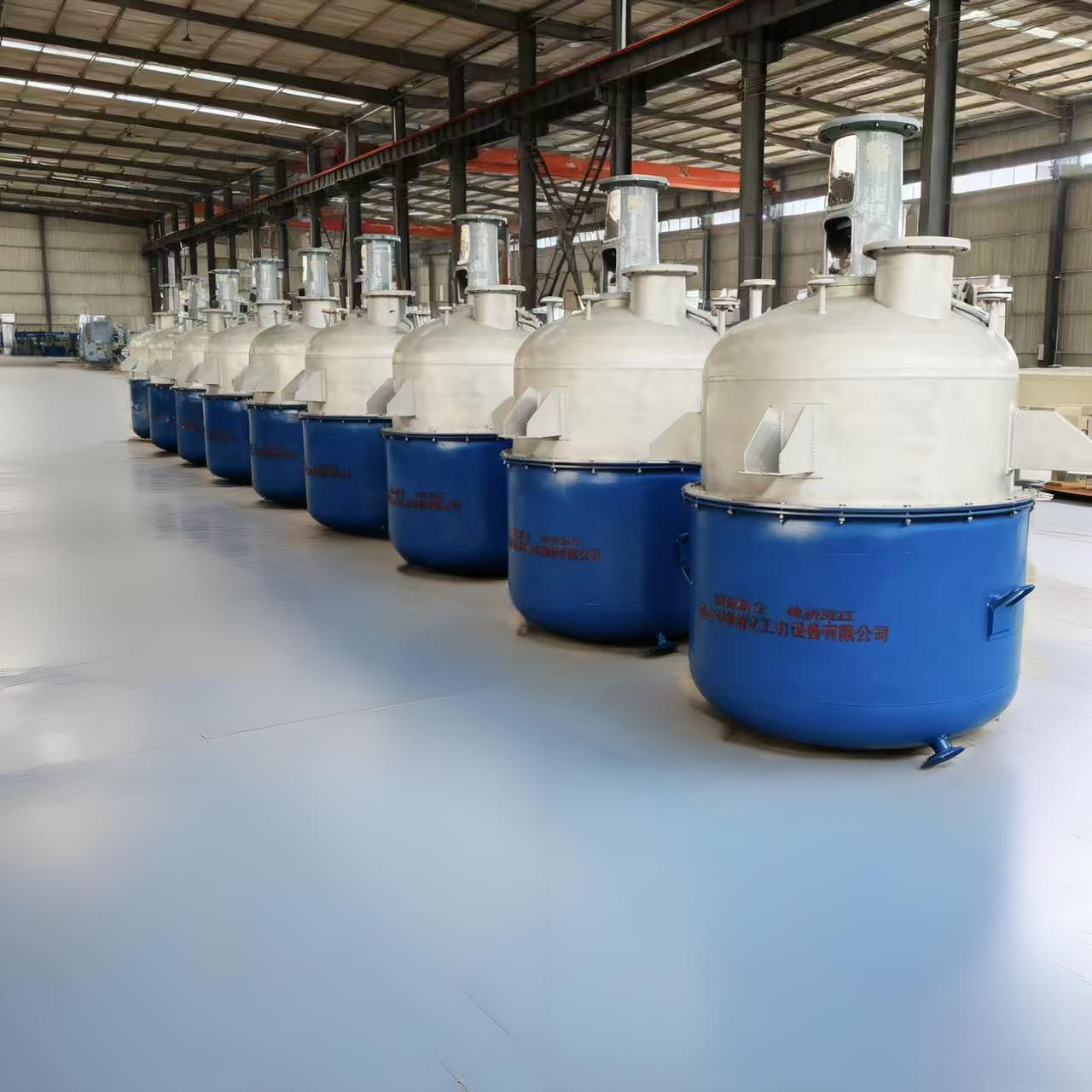
Every unit we produce begins with a fundamental belief: safety isn’t a feature you add at the end—it’s woven into the fabric of our design process from the very first sketch. Unlike conventional approaches that treat protective measures as afterthoughts, our original engineering philosophy demands that risk mitigation shapes every decision, from material selection to circuitry layout. We map out potential failure scenarios before a single prototype is built, using decades of field data and human-centered research to anticipate real-world stresses. This preemptive mindset ensures that when our products reach your hands, they don’t just meet safety standards—they redefine them.
The heart of this approach lies in what we call “defensive layering.” Rather than relying on a single barrier between you and potential hazards, each unit incorporates multiple independent safeguards that overlap in purpose but differ in execution. For instance, mechanical isolation mechanisms work independently of electronic monitoring, so that if one system encounters an unexpected fault, the other remains fully capable of maintaining safe operation. These layers are not designed to merely react to problems; they are engineered to prevent cascading failures. This redundancy is invisible during normal use but becomes the critical difference when the unforeseen happens.
Our commitment to original engineering extends beyond the product itself and into the testing environment. We don’t just simulate standard use; we push every unit through an accelerated lifecycle that mimics years of heavy usage in compressed timeframes. Extreme temperatures, humidity swings, voltage spikes, and mechanical shocks are applied in brutal sequences designed to exploit any design weakness. Teams of engineers analyze every cracked enclosure or erratic signal with the same intensity as a full-scale incident, feeding those findings back into the design loop. It’s an exhaustive, often tedious process, but it’s how we ensure that the safety built into every unit isn’t just a promise—it’s a proven, enduring reality.
Reliability Testing That Exceeds Industry Standards
Most manufacturers stick to the bare minimum when it comes to durability checks—a few cycles in a controlled lab, maybe a drop test on a good day. We take a different path. Every product gets pushed into scenarios that mirror years of abuse in weeks, from rapid temperature swings that would crack lesser materials to vibration profiles borrowed from aerospace. It’s not about ticking boxes; it’s about knowing the thing will survive when a customer accidentally leaves it on the roof of their car during a hailstorm.
We’ve built our own torture chambers—custom rigs that simulate salt fog, relentless UV exposure, and even the grimy reality of a construction site. Standard protocols stop at 500 hours of salt spray? We go until the metal whispers for mercy, often double that. Components are baked, frozen, drowned, and shaken until weak links surface. Then our engineers dissect every failure, redesign the culprit, and run it all again. The result is gear that outlasts warranties and expectations alike.
Third-party certs are fine for a baseline, but our internal benchmarks are where ego dies and real improvement happens. We track failure modes obsessively and share the data not just with R&D, but with the frontline teams who hear about field failures first. That feedback loop means a connector someone complained about three months ago is now rated for triple the insertion cycles—and we’ve already moved on to the next weakest link. It’s a never-ending hunt for fragility.
Materials and Construction Crafted for Harsh Environments
When designing for environments that punish ordinary equipment, the selection of base materials becomes the first and most critical decision. We lean heavily on marine-grade 316L stainless steel, not just for its corrosion resistance but for its ability to hold tight tolerances after repeated thermal cycling. In components exposed to abrasive slurries, a high-chrome white iron with a carefully controlled carbide structure offers three times the life of standard wear plates. Even the polymer seals are chosen with intent—perfluoroelastomers (FFKM) that maintain elasticity at temperatures where standard fluorocarbons turn brittle, ensuring a gas-tight barrier in chemical processing plants.
Construction methods, too, move beyond standard practice. Robotic welding with real-time arc monitoring eliminates the tiny inclusions that become crack initiation points under cyclic loading. For assemblies destined for subsea use, we apply a multi-layer fusion-bonded epoxy under strict vacuum conditions, preventing the micro-voids that lead to cathodic disbondment. Bolted joints are tensioned with ultrasonic measurement, not torque, to achieve the precise clamping force needed to resist vibration loosening on mining shakers. Post-weld heat treatment is never a checkbox; it is tailored to the actual carbon equivalent of the heat, minimizing residual stress without sacrificing toughness.
The result isn't just a longer service interval—it's a fundamental shift in what operators can expect. A pump casing cast from a modified super duplex stainless steel can now handle the low pH and high chloride levels of a geothermal brine that would destroy a standard 316 unit in months. Conveyor rollers with labyrinth seals and permanently lubricated double-row sphericals run maintenance-free for years in potash mines where dust ingress is constant. These are not incremental upgrades; they are products rethought from the molecular level up, specifically for places that demand more than catalog solutions.
Certifications That Prove Our Commitment to Protection
Earning globally recognized security certifications isn't a box-checking exercise for us—it's a deliberate choice to subject our systems and processes to relentless external scrutiny. Each framework we pursue demands rigorous audits, deep architectural reviews, and proof that protection is woven into our daily operations rather than treated as an afterthought.
Our ISO 27001 certification maps out a comprehensive information security management system, while the SOC 2 Type II report goes further, verifying that controls around data privacy and availability actually work over an extended period. Achieving these means our teams have built not just strong defenses, but a culture where every release, every configuration change, and every incident response reinforces the same high bar.
Beyond checklists, these certifications represent a promise to our customers that independent experts have verified our safeguards. But we don't stop once the audit report is issued—continuous monitoring and annual reassessments ensure that as threats evolve, our commitment to protection stays a step ahead.
Real-World Performance in Critical Industrial Applications
When every second counts and failure isn’t an option, the systems running behind the scenes have to deliver without hesitation. In sectors like energy distribution, chemical processing, and heavy manufacturing, performance isn’t just a metric—it’s the linchpin of safety and operational continuity. Equipment here faces thermal swings, vibration, dust, and relentless duty cycles that would cripple ordinary hardware. The true test is how these solutions hold up not in a lab, but on a factory floor where ambient temperatures exceed 40°C and unexpected loads are the norm.
Field data from oil refineries and automated assembly lines tells a clear story: downtime drops sharply when control systems are engineered for edge-case resilience. One example is a packaging plant that swapped generic industrial PCs for ruggedized, passively cooled units after repeated failures in high-humidity zones. Not only did mean time between failures quadruple, but the consistency of high-speed sorting improved noticeably, eliminating bottlenecks that had plagued peak production hours. Another case involved a water treatment facility where programmable logic controllers with conformal coating survived a chemical leak that would have corroded standard boards within days.
What separates top-tier performers in these environments is the marriage of robust hardware design with deep application-aware software tuning. Instead of chasing benchmark scores, the focus shifts to deterministic response times under sustained load, graceful degradation when a sensor fails, and predictive diagnostics that alert teams before a component drifts out of tolerance. This approach has proven itself across mining operations, offshore platforms, and pharmaceutical lines, where even a momentary lapse can mean scrapping an entire batch or triggering a costly safety shutdown.
FAQ
Our heaters are built with a multi-layer safety design that goes beyond basic compliance. We use thicker, corrosion-resistant housings and precision temperature controls that actively prevent hot spots, even under fluctuating load conditions.
We subject every heater to a 72-hour continuous operation test under simulated process conditions before leaving our factory. Additionally, the heating elements are embedded in a compacted magnesium oxide insulation that resists moisture ingress and vibration damage, which is a common failure point in other designs.
Absolutely. We supply a complete certification package with each unit, including ATEX, IECEx, or UL certificates depending on the destination. The documentation is traceable to the individual serial number, so you can verify compliance directly with the issuing body.
We manufacture entirely in-house, so we can adjust flange sizes, immersion lengths, and watt densities to match your reactor geometry precisely. We also offer custom sheath materials like Incoloy or titanium for highly aggressive media.
Dealing with us directly means you get engineering support from the team that designs the heaters. We can troubleshoot installation issues quickly and often provide faster lead times because there’s no middleman delay in communication or shipping.
We integrate redundant thermal fuses and ground fault protection directly into the heater assembly. In an overheat scenario, the system shuts down locally before the temperature reaches an unsafe level, independent of the main control panel.
Yes, we have a field service team that can travel to your site for start-up supervision and operator training. This ensures the heaters are installed correctly and your team understands the safety interlocks from day one.
We keep detailed build records for every heater we’ve manufactured. Even if a unit is a decade old, we can usually supply identical replacement elements or complete rebuild kits with rapid turnaround, which helps you avoid re-engineering the installation.
Conclusion
Safety in hazardous environments isn’t an afterthought—it’s the foundation of our explosion-proof reactor heaters. We engineer every unit from the ground up with protection as the core principle, not a bolted-on feature. Our original designs integrate advanced flameproof enclosures, temperature controls, and pressure relief systems that actively prevent ignition sources, even under the most volatile process conditions. But genuine reliability is earned through testing that goes far beyond routine checks. Each heater endures thermal cycling, vibration trials, and extreme pressure simulations that surpass standard industry certifications. We push prototypes to failure intentionally, learning exactly where limits lie and how to reinforce them. This obsessive approach means our heaters don’t just meet safety codes—they redefine them in real production environments.
The strength of our heaters lies equally in what you can see—and what you can't. We select only high-grade stainless steels, specialized alloys, and ceramic insulation that stand up to corrosive chemicals, thermal shock, and abrasive media day after day. Every weld, seal, and connection is crafted with precision that comes from decades of experience in harsh industrial settings. Our certifications—ATEX, IECEx, and regional standards—are not simply paperwork; they are independent validations of a design philosophy centered on protection. But the ultimate proof is in real-world performance: chemical plants, refineries, and pharmaceutical facilities depend on our reactor heaters to maintain critical reactions without interruption. In these environments, safety and reliability aren't features—they are absolute requirements, and we deliver them consistently.
Contact Us
Contact Person: Mr. Wang
Email: [email protected]
Tel/WhatsApp: 8613705299955
Website: https://vip.e-baixing.com/szhgyw