
Rotary Union Manufacturer Insights: Optimizing Performance and Reliability
2026-07-25
When a rotary union fails, it’s rarely just a component swap—it’s a cascade of downtime, lost throughput, and hurried maintenance. Yet many engineers treat these precision parts as commodities, overlooking the subtle design choices that separate months of trouble-free operation from premature leakage. As a pioneer in rotary union technology, MOFLON has spent years decoding the real drivers of performance and reliability—from fluid dynamics to material pairings. In this blog, we’re pulling back the curtain on those insights, revealing how thoughtful engineering can turn a simple swivel into a strategic advantage. If you’ve ever wondered why some rotary unions thrive under brutal conditions while others barely survive, you’re in for a revealing deep dive.
Material Choices That Extend Union Lifespan
The alloys and coatings selected for union components directly shape how long they withstand cyclic loading and corrosive attack. Brass unions with a higher copper content, for instance, resist dezincification in aggressive water conditions, preserving thread integrity long after standard grades would begin to pit and leak. Stainless steel variants—particularly 316 grade—add a layer of chloride resistance that proves essential near coastal installations or chemical processing lines, where salt-laden air rapidly compromises lesser materials.
Elastomeric seals and gaskets are just as critical: nitrile rubber offers solid performance in oil and fuel systems, but ethylene propylene diene monomer (EPDM) outperforms it in hot water and steam applications, resisting hardening and cracking for years. Even the plating on fasteners matters—a zinc-nickel coating provides sacrificial protection without the hydrogen embrittlement risk common with pure zinc, keeping bolts snug and unions leak-free through thermal swings.
Beyond base materials, surface treatments forge the final defense. Electropolishing stainless unions strips away microscopic peaks where pitting corrosion initiates, while vapor-deposited titanium nitride on brass threads reduces galling and wear during assembly and disassembly. These choices, often invisible to the naked eye, compound over thousands of pressure cycles to keep unions serviceable long past their expected fatigue life.
Engineering Precision to Eliminate Leak Paths
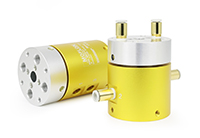
Achieving a flawless seal demands more than just tightening components—it’s a discipline rooted in micrometer-level control. Every mating surface is machined to exacting flatness and finish, often measured in millionths of an inch, to deny even the smallest particle a pathway. This obsession with geometric perfection transforms ordinary assemblies into near-impermeable barriers, where the line between two parts becomes irrelevant to fluid or gas.
Material selection plays an equally cunning role, as thermal expansion coefficients and surface energies are paired with surgical intent. A gasket isn’t merely squeezed; it’s loaded into a calculated elastic sweet spot where creep and relaxation are preemptively countered. By treating every interface as a dynamic living junction rather than a static joint, we turn potential leak sites into areas of deliberate compression harmony, staying sealed under shock, vibration, and temperature swings that would defeat conventional designs.
Validation goes far beyond a simple pressure test. Helium mass spectrometry sniffs out escape routes at the atomic level, while shearography exposes micron-scale deformation under load. These are not pass/fail checks but iterative diagnostics that feed back into machining offsets and assembly torque profiles. The result is a system where leak paths are designed out of existence before a single part hits the production floor—a quiet, invisible triumph of precision engineering.
Controlling Heat Build-Up for Consistent Operation
Unchecked thermal buildup can quietly undermine even the most robust machinery. As components warm past their design thresholds, material expansion throws off precision alignments, lubricants thin out and lose their protective film, and electrical resistance drifts, causing erratic performance. The goal isn't simply to avoid catastrophic failure—it's to maintain a narrow temperature band where everything operates predictably. Small shifts in friction or ambient conditions can cascade if the system can't shed heat quickly enough, leading to a cycle of drift and overcompensation that degrades output quality over time.
Effective heat management relies on recognizing that cooling is not just about airflow or cold plates—it's about matching thermal mass and dissipation rates to the rhythm of the workload. Intermittent high-load periods demand a different approach than steady-state operation. Sometimes, the answer is passive: orienting fins or channels to take advantage of natural convection currents. Other times, active intervention becomes necessary, cycling coolant flow or adjusting fan speed based on real-time sensor feedback. The trick is to stay ahead of the curve, rejecting heat before it accumulates, rather than scrambling to recover once performance has already started to waver.
Tailoring Designs to Unique Operational Demands
Every operation has its own rhythm, challenges, and goals. A one-size-fits-all approach rarely fits the intricate machinery of real-world workflows. When we craft a design, we don’t start with a template—we start by listening. We dig into the daily grind: the bottlenecks that eat up time, the manual workarounds that teams have quietly adopted, and the metrics that actually matter. This understanding lets us shape solutions that feel less like off-the-shelf software and more like a natural extension of the team's expertise.
From the placement of a button to the logic behind automated alerts, every detail is tuned to match the pace and priorities of the people using it. A procurement dashboard for a construction firm might surface supplier reliability scores upfront, while a healthcare scheduling tool might prioritize clinician availability over room availability. These aren’t just feature flags; they’re deliberate decisions born from observing the unique ways different industries breathe. The result is a tool that doesn’t just function—it fits, reducing friction and letting the team focus on the work that only they can do.
Simple Upkeep Routines That Prevent Major Failures
Most people wait until something breaks to fix it, but that approach often leads to expensive repairs and unnecessary stress. A few basic, consistent habits can keep your equipment or living space running smoothly. For example, regularly cleaning filters, checking for leaks, and tightening loose connections are small acts that prevent bigger disasters. It’s about building awareness and responding to minor issues before they spiral out of control.
Think of these routines as a form of proactive insurance. Whether it’s changing the oil in your car, clearing gutters before the rainy season, or replacing worn seals on a faucet, the upfront effort is minimal compared to the chaos of a full-scale failure. Sticking to a simple monthly checklist can extend the lifespan of appliances and systems, saving money and hassle. The secret is consistency—integrating these checks into your calendar so they become automatic.
Beyond preventing failures, these upkeep habits also give you a deeper familiarity with how things work. You start noticing when something sounds off or looks different, allowing you to address it early. Over time, you’ll develop an intuition that alerts you to potential trouble. Ultimately, consistent maintenance isn’t just about preventing breakdowns—it’s about creating a more reliable and controlled environment.
Breakthroughs Redefining Long-Term Dependability
For decades, dependability meant simply lasting longer without breaking down. Today, it has evolved into a far more nuanced concept, driven by innovations that anticipate problems before they occur. Self-healing materials, for instance, are no longer a lab curiosity but a practical reality in everything from smartphone screens to airplane coatings. These materials use microcapsules or vascular networks to release healing agents when damage happens, effectively turning passive structures into active guardians of their own integrity. This shift from reactive maintenance to proactive resilience is quietly rewriting the rules of reliability.
Another paradigm shift is the rise of digital twins—virtual replicas of physical assets that learn and evolve in real time. By mirroring the exact stress, temperature, and vibration conditions of their real-world counterparts, these models can flag subtle degradation patterns that human inspectors would miss. A bridge no longer waits for a scheduled checkup; it continuously reports its own health. The result is a leap from calendar-based upkeep to condition-based stewardship, slashing downtime and vastly extending operational life.
Underpinning all of this is a fundamental change in design philosophy: redundancy is no longer just about spare parts. Engineers now weave diversity into systems at the architectural level, ensuring that no single fault can cascade. Think of a data center where power, cooling, and networking paths are not just duplicated but varied in technology and vendor. This heterogeneity means that even a widespread flaw in one component type cannot take down the whole system. Coupled with algorithmic oversight that reroutes resources in milliseconds, these breakthroughs are making long-term dependability less about luck and more about engineering certainty.
FAQ
Leak prevention hinges on precision seal geometry and surface finishes. Lapped seal faces made from dissimilar materials like tungsten carbide and carbon graphite create a hydrodynamic film that minimizes wear and resists leakage. Multi-spring loading maintains consistent contact pressure even as the union experiences thermal cycling or vibration.
Media compatibility starts with the seal and housing materials. For aggressive coolants, stainless steel internals and ethylene propylene seals are common. Hot oil requires fluorocarbon elastomers and hardened bearing components to withstand viscosity shifts and thermal degradation. Always verify the temperature range and chemical resistance charts from the manufacturer.
High spindle speeds generate centrifugal forces that can distort seal faces and cause rapid wear if the union isn't balanced for those RPMs. Inadequate lubrication or coolant filtration also accelerates failure. Using unions with hydrodynamic pressure relief and integrated filtration can dramatically extend service life at speeds above 15,000 RPM.
Materials dictate the union's friction coefficient, corrosion resistance, and thermal conductivity. For instance, silicon carbide seals paired with carbon graphite offer low friction and high thermal dissipation, ideal for continuous-duty applications. Housing material like brass or stainless steel should match the environment to avoid galvanic corrosion in mixed-metal systems.
Absolutely. Traditional ball bearings may wear under side loads from misaligned piping. Upgrading to spherical roller bearings or reinforced tapered bearings can handle higher radial and axial loads, reducing wobble and preserving seal alignment. This simple change often doubles the mean time between failures in steel mill or marine applications.
Instead of fixed intervals, adopt condition-based monitoring. Track seal leakage rates, temperature spikes, and torque changes with sensors. For round-the-clock lines, quick-change unions with cassette-style seals allow replacement during planned downtime without disassembling the entire rotary joint, cutting maintenance windows from hours to minutes.
Advanced unions now incorporate internal cooling channels or thermal breaks to isolate the seal chamber. Some designs use controlled venting to purge steam in hot water service, preventing vapor lock. These features keep seal faces within their optimal temperature band, preventing thermal shock and extending seal life in injection molding or drying cylinders.
Conclusion
Rotary union manufacturers are pushing the boundaries of performance and reliability through a meticulous blend of material science, precision engineering, and thermal management. Advanced materials like hardened alloys and engineered polymers dramatically extend service life, even in abrasive or corrosive environments, while tight-tolerance machining and innovative seal geometries eliminate leak paths that compromise fluid integrity. Controlling heat build-up is equally critical; integrated cooling features and heat-dissipating designs prevent thermal expansion from disrupting consistent operation, ensuring that unions maintain their performance envelope under prolonged high-speed or high-temperature duty. Tailoring each unit to the specific demands of an application—whether handling extreme pressures, aggressive chemicals, or rapid cycling—further cements reliability by avoiding generic compromises.
Simplicity in upkeep remains a cornerstone of avoiding catastrophic failures, with routine inspection and timely replacement of wear components drastically reducing unplanned downtime. The latest breakthroughs, such as embedded sensors for real-time condition monitoring and self-lubricating composites, are redefining long-term dependability by enabling predictive maintenance and reducing friction-induced degradation. Together, these insights shape a manufacturing philosophy where robust custom engineering merges with practical maintenance strategies, delivering rotary unions that consistently outperform in the most challenging industrial landscapes.
Contact Us
Contact Person: Xiangpin Li
Email: [email protected]
Tel/WhatsApp: 86 186 1706 8578
Website: https://www.moflon.com